01
A quiz that stretches one resident can upset another.
For a resident with dementia, a question with a right answer can feel like a test in front of others.
For residential, nursing and dementia-care homes in England
Kindred is the brain-health programme every family wants, run under your home's name. A trained coach leads sessions on your lounge TV, every resident has a track that suits them, and every family gets a report each Sunday.
Kindred's group sessions follow cognitive stimulation therapy, which NICE recommends for mild to moderate dementia. Sessions for residents without dementia use the methods tested in the largest dementia-prevention studies.
Why is it so hard to keep every resident's mind engaged?
Because their needs range from wanting a real challenge to living with advanced dementia.
About 70% of older people in care homes in England are living with dementia, while others have a good memory and want to be challenged.
01
For a resident with dementia, a question with a right answer can feel like a test in front of others.
02
Residents with a good memory want real answers, teams and a bit of competition.
03
Planning separate sessions for every group takes time your coordinator would rather spend with residents.
04
Most of what their relative enjoys happens while they're not there to see it.
1
A named brain-health programme led by a real coach is something families can see on a tour and remember afterwards. In most areas you'll be the first home to offer one, and filling a room even a few weeks sooner is worth thousands.
2
Kindred puts something concrete behind your fees. Every week, families see what makes your home the premium choice.
3
Our coach leads the sessions and we plan every one. Your coordinator spends about a minute after each session, and the plans stay with your home, so the programme keeps running when staff change.
4
CQC wants to see every resident engaged and care that's person-centred. Kindred records every session and builds a monthly evidence pack under CQC's five questions. When an inspector asks, the answer is already written down.
5
Three in four people choosing a home say reviews are very important to them. Families who hear every week what their parent enjoyed have something specific to say.
6
Most family worries come from not knowing. A report every Sunday, covering Kindred's sessions and your own activities, answers them before they're asked.
7
Families pay for the programme monthly, on top of their fees, and your home keeps a share in pure profit.
Your activities coordinator chooses each resident's track using their care plan and their own wishes. Residents can join more than one group and move up or down between tracks as their needs change, so nobody is left with something too hard or too easy.
For residents without dementia, or with early memory problems
Teams compete in quizzes, puzzles and debates about the news, with five minutes of gentle exercise in every session and a league against other homes. Between sessions, members get a short daily challenge on a tablet or their own phone that gets harder as they improve. Up to 12 members, meeting once or twice a week with the coach.
Built on
The methods used in the largest dementia-prevention studies: FINGER and US POINTER, which combined mental challenge, physical activity and social contact, and ACTIVE, which tested speed training.
Limits of the evidence
Those studies involved people living at home, mostly under 80. We use the same methods, but we don't claim the same results for care-home residents.
For residents with mild to moderate dementia
Small groups of 5 to 8 residents, each with its own name and song. They follow the 14-session cognitive stimulation therapy course twice a week, then carry on with regular weekly sessions. Between sessions, residents play gentle tablet games built from the photos and stories their family has shared.
Built on
Cognitive stimulation therapy, which NICE recommends. A 2023 review of 37 trials found a small benefit to thinking, and clearer benefits to communication and social contact.
Limits of the evidence
Our coach leads on screen while your coordinator is in the room. Online CST has done well in small early studies but hasn't yet been tested in a full trial.
For residents with advanced dementia
Fifteen minutes a day on a tablet, with the resident's own photos, favourite music and video messages from their family. A carer can sit with them while the tablet suggests what to show and talk about, or Kindred can lead it on its own, with a calm narrated story built from their life.
Built on
Music, sensory and one-to-one approaches such as Namaste Care and personal playlists.
Limits of the evidence
Research shows benefits to mood, comfort and agitation. Group sessions no longer suit most people at this stage, so Comfort is always one-to-one.
The same coach leads the same group, in the same room, with the same song every week, so residents know what to expect. The topics and photos change, and they're chosen from what residents responded to.
Step 1
The coach greets each resident by name and talks about the day. The group looks at old and new photos and answers questions that ask for opinions, so no answer is wrong.
Step 2
After the session, your coordinator marks who came and writes one sentence about each resident. It takes about a minute.
Step 3
On Sunday each family receives a report of what their relative did and enjoyed, including your home's own activities that week, with a suggested topic to talk about when they next visit.
Step 4
Kindred picks upcoming topics from what residents enjoyed most, and removes any topic that upset a particular resident.
A 14-minute tour of the real product at an example care home in Surrey. Choose a chapter to jump straight to it.
Having a parent in care is hard. Families want to know their relative is happy, engaged and keeping their mind active, and most can't visit as often as they'd like. Kindred shows them, every week. They'll value it immensely, and it'll be a strong reason they choose your home and recommend it.
Each Sunday's report says how many days their relative joined in, which sessions they went to, and what they enjoyed.
Families can see that sessions follow cognitive stimulation therapy, the approach NICE recommends for dementia, led by a trained coach.
Every report suggests a topic for their next visit, taken from what came up in the week, so visits have more conversation.
Families can add memories, songs and photos to their relative's profile, and future sessions use them.
The report includes your own activities too, from the pet-therapy visit to the summer fête, so families see the whole of their relative's week.
Families pay for Kindred as a monthly programme, alongside the extras many already pay for, such as hairdressing and physio. Your home keeps 30% of every payment in pure profit, with no running costs, no extra staff hours and no new residents needed.
1
Many families pay a private companion £20 to £30 an hour to sit with a parent who already lives in a care home, simply so they're engaged and not alone. Kindred gives them far more than that every week.
2
Similar day-to-day care costs around £1,300 a week in one home and £2,000 or more in another. Families pay the difference for the feel of the home, the activities and the reassurance. Kindred is something concrete they can see.
3
Kindred is a few per cent of a typical monthly fee. For the thing they worry about most, their mum's mind, that's an easy decision.
4
Most families can't visit as often as they'd like, and many feel guilty about it. A report every Sunday saying their mum joined in, what she enjoyed and what to talk about next time is reassurance they can't get any other way.
Homes can also license Kindred and include it for every resident as part of their fees. We'll walk you through both options on the call.
We don't set Kindred up and leave you to it. Everything below is written, designed and ready to use, in your home's name and colours.
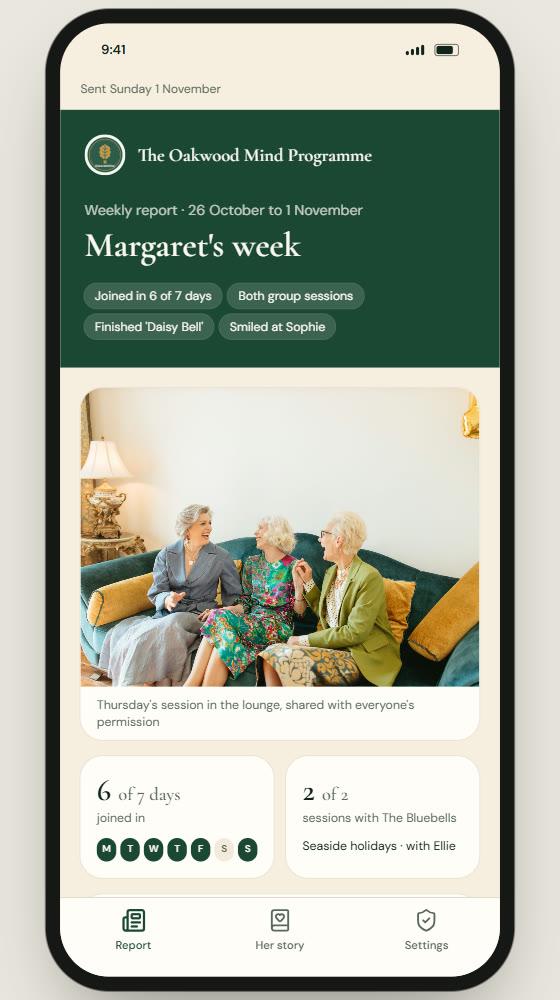
Families
Days active, sessions joined, your home's own activities, what their relative enjoyed, a voice message from them, and a topic to talk about on their next visit.
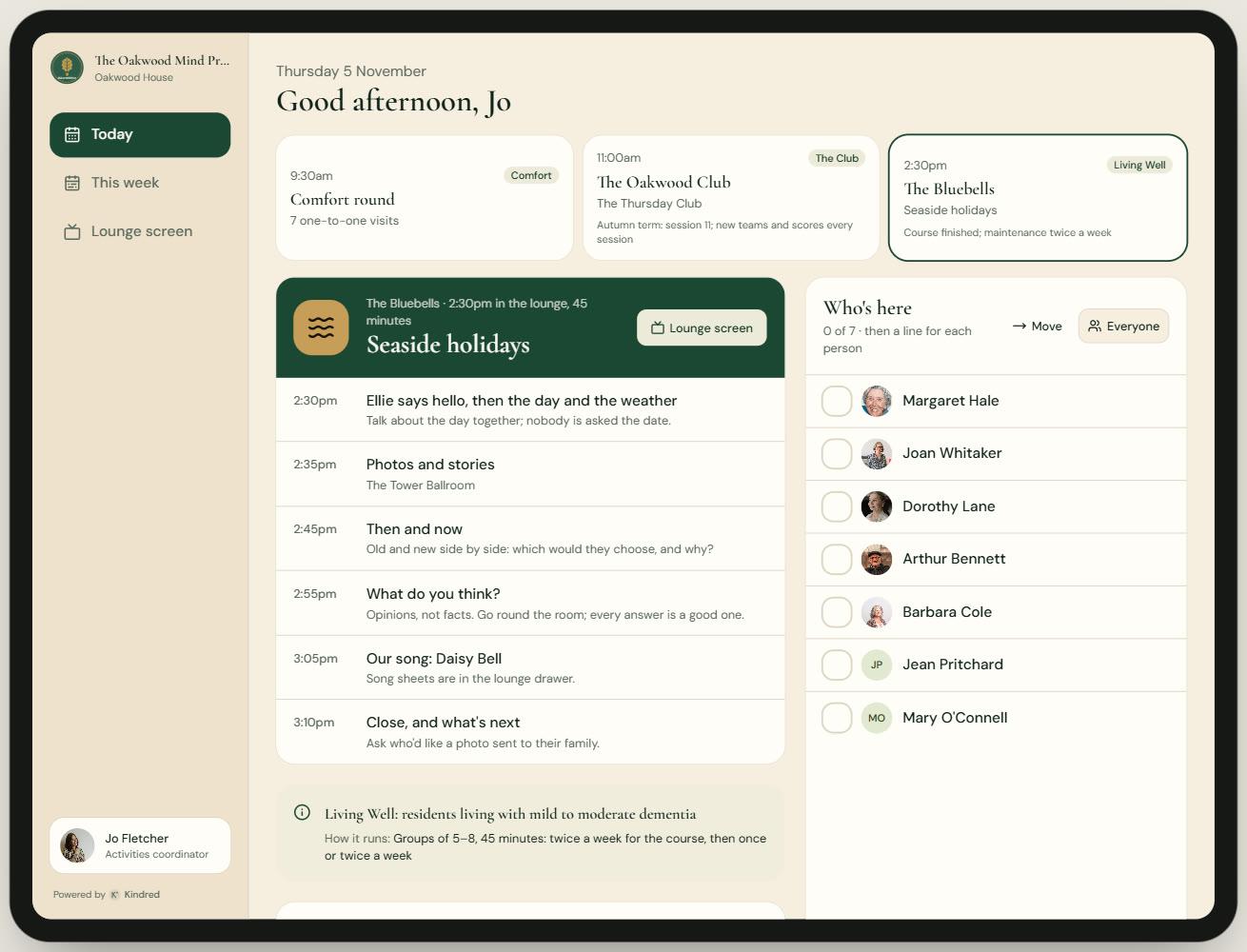
Your activities coordinator
Each group's plan, photos and questions for the day, and a list to mark attendance and add one sentence per resident in about a minute.
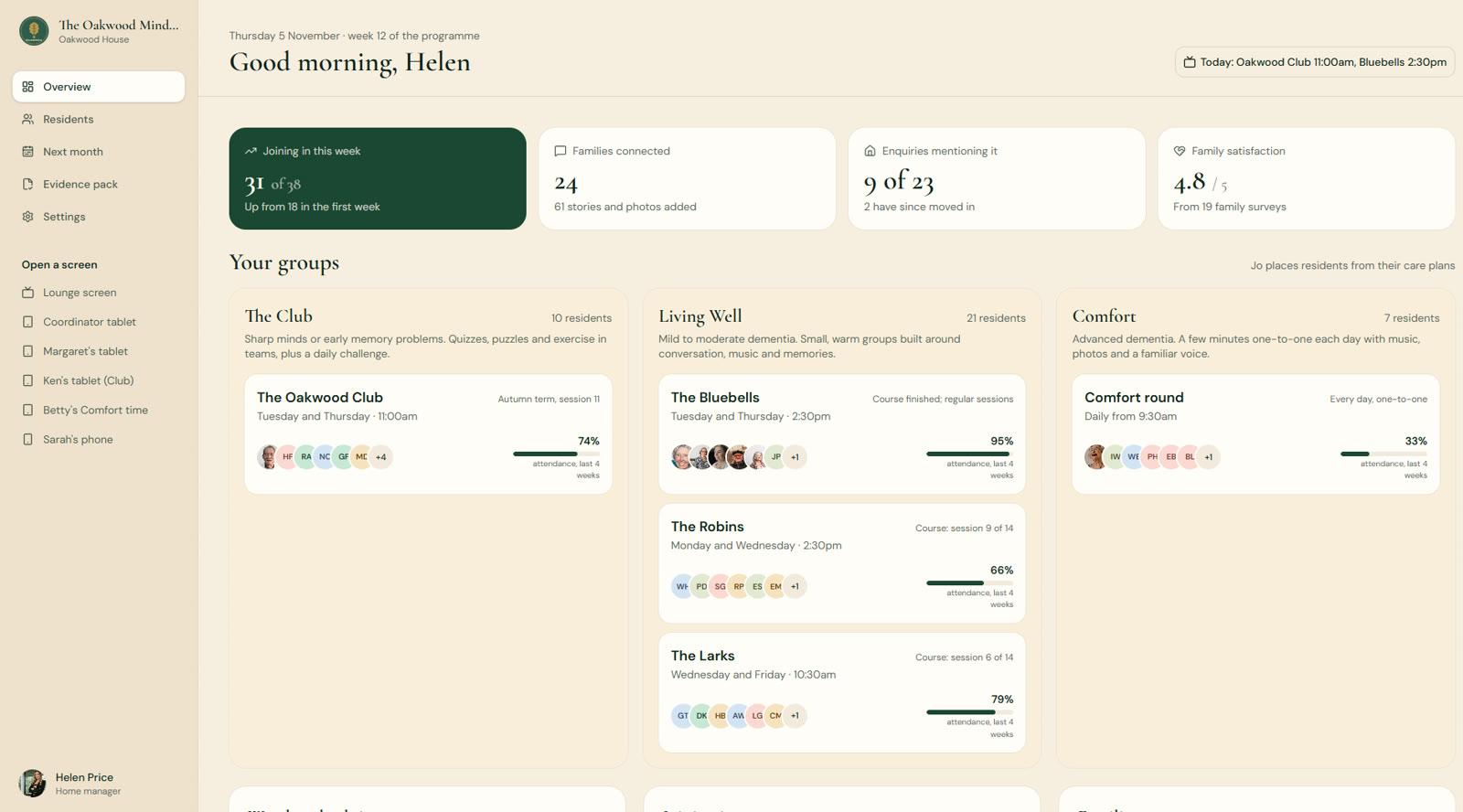
Your manager
Attendance by resident, group and week, with a flag on anyone who has stopped attending so staff can check on them.
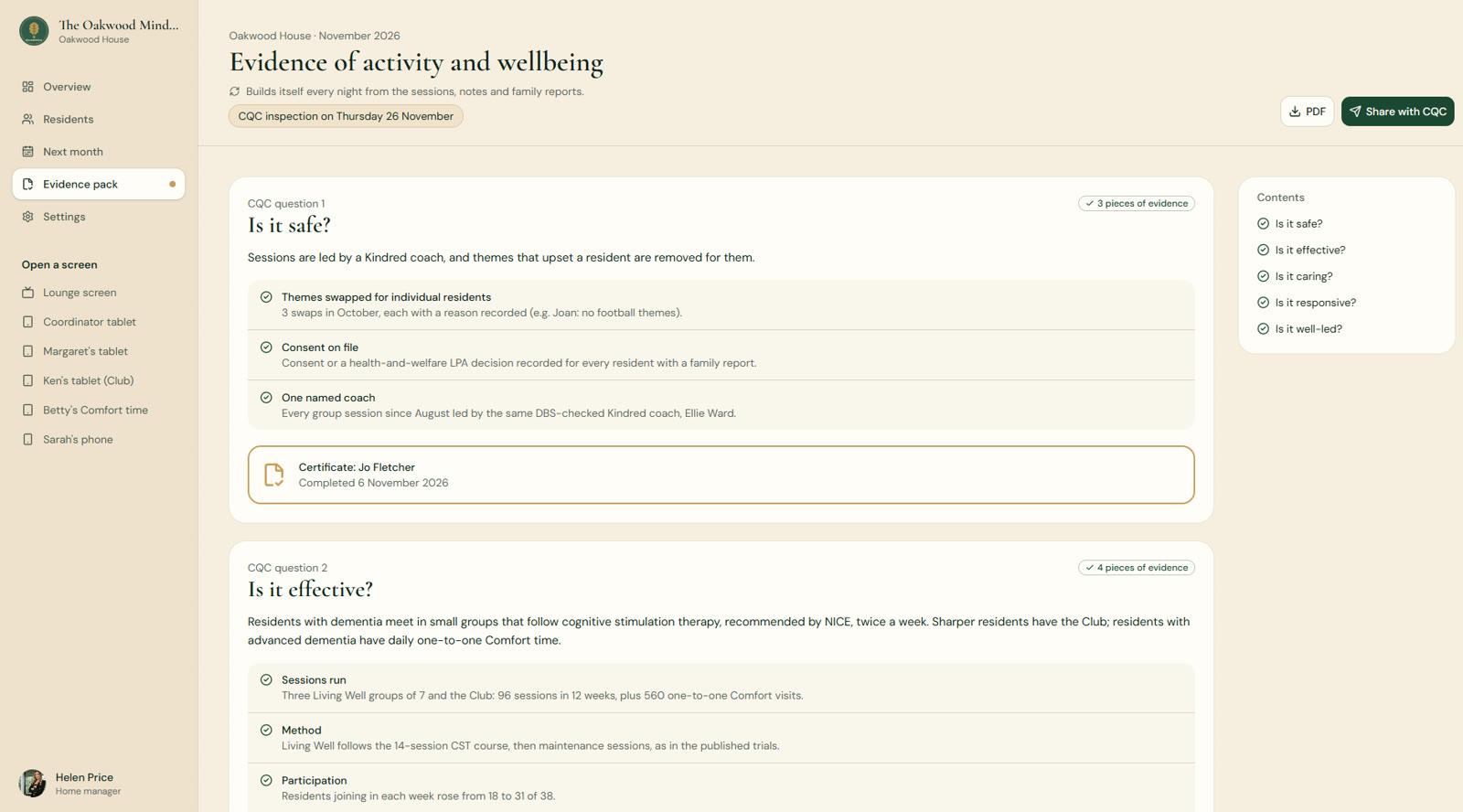
Your CQC inspector
Dates, attendance, examples and the method each track follows, ready before the inspection rather than gathered the night before.
A care home called Oakwood might call it "The Oakwood Mind Programme". We adapt everything to your logo and colours, from the lounge TV to the family reports, and set session times that fit your day. A laptop connected to your lounge TV is all the equipment you need.
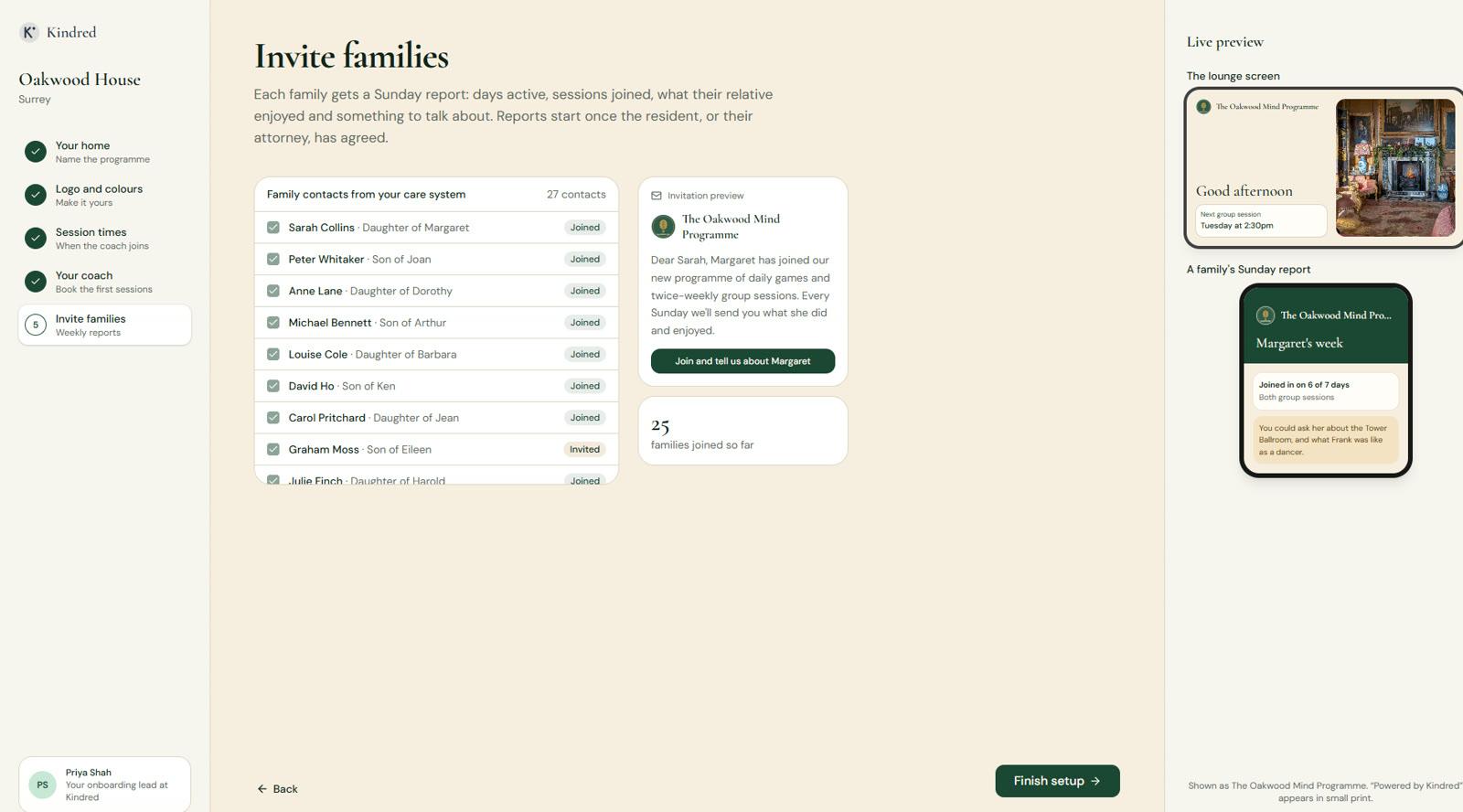
We sit with your coordinator and choose a track for each resident, using their care plan and their own wishes. Each group then picks its own name and song.
Before anything goes to families, we run a test session so you can see and try it for yourself, and anything you'd like changed gets ironed out first.
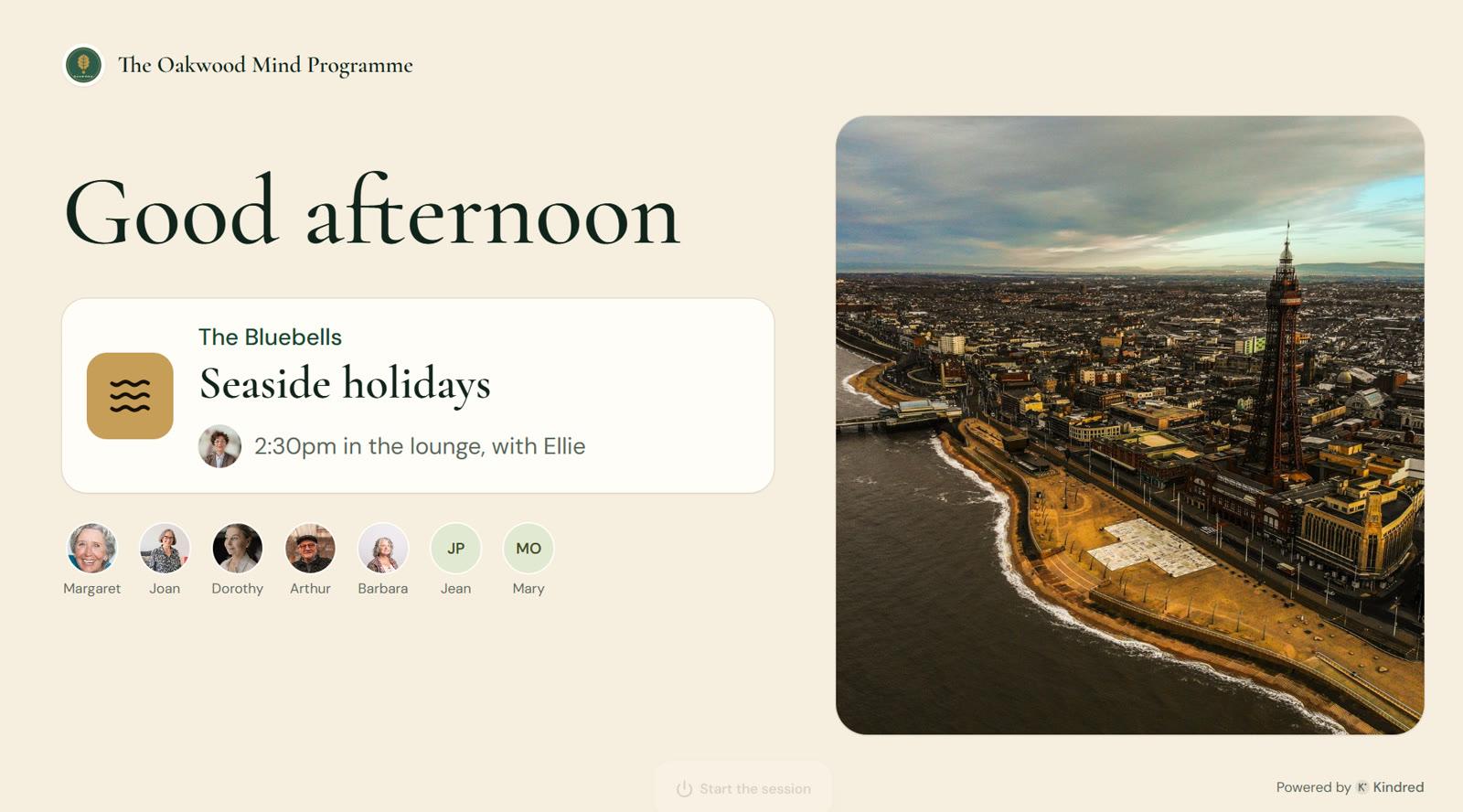
A Kindred coach leads the 14-session course live on your lounge TV, twice a week, while your coordinator helps in the room and learns how it's run.
Your coordinator completes eight short training modules and receives a certificate in your home's name. They then lead the weekly sessions, with the coach on screen.
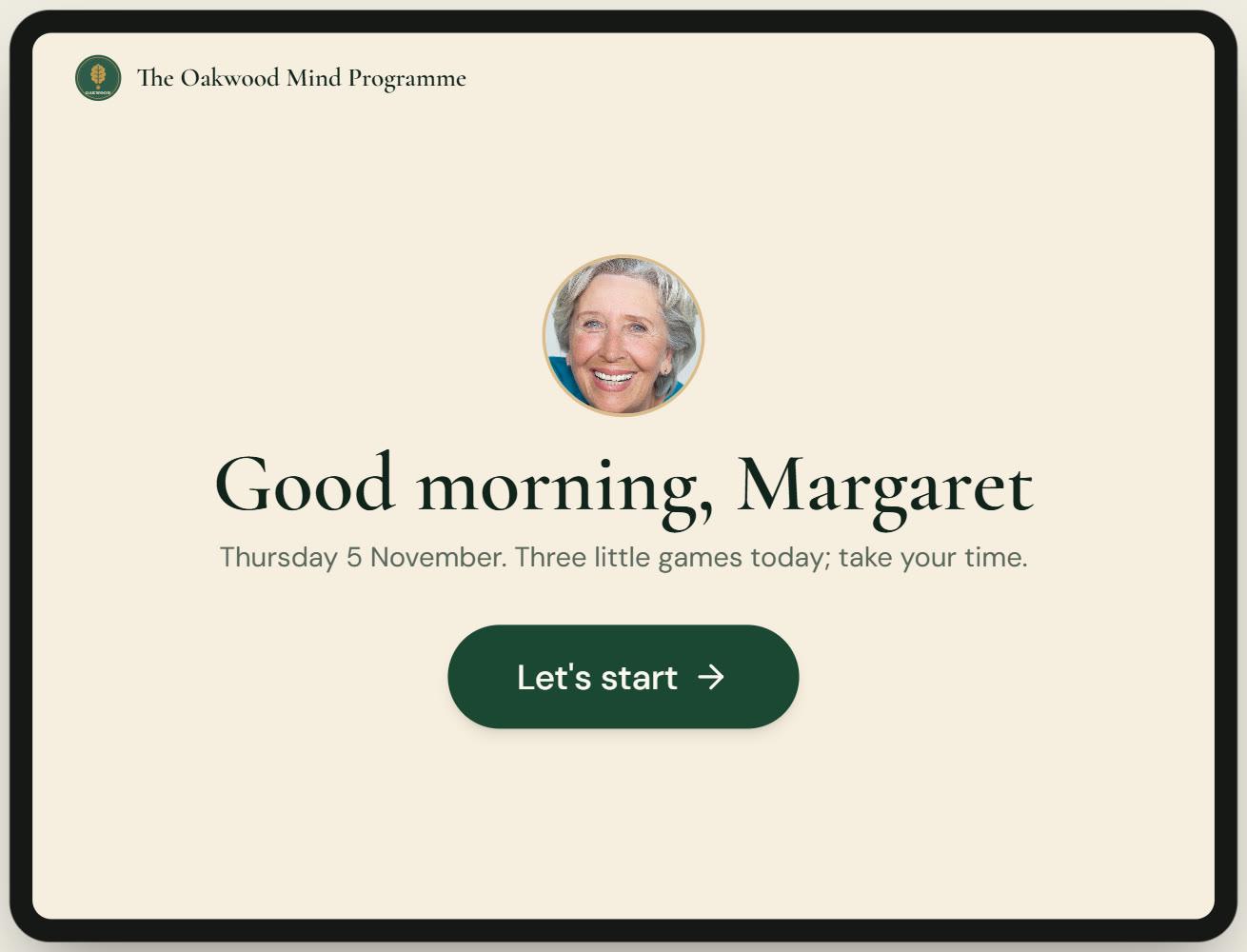
We write the first family reports ourselves. Reports are only sent with the resident's consent, or the consent of their attorney.
Adam and Megan, founders
Kindred was founded by Adam and Megan, who both studied at Oxford. Megan previously ran online marketing and growth for five care homes in South Asia, bringing in hundreds of thousands of pounds in extra revenue through bookings. She knows in detail how families choose a home and what they're willing to pay more for.
Adam studied computer science and philosophy at Christ Church, and has built similar products in regulated areas, from mental-health programmes for young people to personal tutoring. His grandmother has Alzheimer's and lives in a care home, which is why he built Kindred: excellent support for every resident, in a way any home can easily deliver.
What you do today
What Kindred adds
What you do todayFamilies hear how she's doing when they call or visit.
What Kindred addsA written report every Sunday, with what she enjoyed and a topic to talk about.
What you do todayYour coordinator runs a full activities programme.
What Kindred addsA recognised method, a coach and a plan for every group.
What you do todayYour team knows each resident's interests and life story.
What Kindred addsSessions built from those interests, with photos and songs that families add to each resident's profile.
What you do todayResidents with dementia take part in activities chosen with care.
What Kindred addsLiving Well groups that follow cognitive stimulation therapy, with questions that ask for opinions, so no answer is wrong.
What you do todayResidents with a good memory enjoy quizzes and conversation.
What Kindred addsThe Club: harder team quizzes, a league against other homes and a short daily puzzle.
What you do todayYour coordinator's plans and experience keep the programme running.
What Kindred addsSession plans and notes stored for your home, and the same eight training modules for anyone who joins your team.
What you do todayYour staff notice when a resident seems withdrawn.
What Kindred addsA flag on the manager's dashboard for anyone who has stopped attending, so it's always followed up.
What you do todayYou keep good records for CQC.
What Kindred addsA monthly evidence pack, already organised by CQC's five questions.
Each of the other options does some of these things well, and a good activities coordinator does a great deal. Kindred is the only option that does all of them.
The best option
We run The Club and Living Well to keep residents sharp and engaged. When a resident's memory starts to slip, families feel comfortable and confident keeping them with you, for up to six months longer. Every extra month is worth around £5,600 to your home.
All three tracks, so every resident has something that suits them, from team quizzes to one-to-one Comfort time.
Kindred works inside the approach you already use, whether that's Dawn Brooker, Montessori, Teepa Snow or your own. Comfort sits at the centre, and the Sunday report shows families the specialist work your team does every day.
A programme that looks and feels as considered as the rest of your home, branded as your own.
1
The lounge session, the coordinator's tablet and a family report, set up with your home's name and colours.
2
Which tracks suit your residents, how it fits your team's week, and whether it's a great fit.
3
After the call, a short plan for your home with the groups, session times and launch timeline, plus a quotation.
There's no commitment. If you go ahead, everything we promise is set out in a written contract.
Yes, and they already show it. Many hire private companions at £20 to £30 an hour so a parent isn't alone, and they pay more for homes where they can see the quality. Kindred costs a few per cent of a typical fee and speaks to their biggest worry, with a report every Sunday to prove it.
Kindred keeps everything your team does well, and adds proven methods, a trained coach, a track for every resident and a weekly report to families. The report includes your own activities too.
No extra paid hours. Our coach leads the sessions, we plan every one, and the evidence pack builds itself. Your coordinator spends about a minute after each session. You choose how involved your staff are: the coach can lead every group, and Kindred can run Comfort on its own.
Residents don't use any technology. Living Well and The Club happen on your lounge TV, and residents just talk. Residents with advanced dementia get Comfort one-to-one, with their own music and their family's faces. Practically every resident has something they can genuinely enjoy.
All you need is a laptop plugged into your lounge TV with an HDMI cable, and for bigger lounges we send a speaker and camera. Before anything goes to families, we run a live test session in your lounge, so you see it working first.
No running costs. Families pay for the programme, and your home keeps 30% of every payment in pure profit.
Yes. Instead of families paying for it as an extra, your home can license Kindred and include it for every resident as part of your fees. We'll walk you through both options on the call.
Yes. Residents and families see your programme name, logo and colours, for example "The Oakwood Mind Programme".
Each month the manager receives an evidence pack organised by CQC's five questions, with dates, attendance, examples and the method each track follows. It shows what you do; you decide how to present it.
Family reports and photos are only shared with the resident's consent, or the consent of someone with a health-and-welfare lasting power of attorney. Either can withdraw consent at any time.
Your coordinator removes it for that resident in a couple of taps, and Kindred stops offering it to them. Nobody else's sessions change.
Yes. In small homes, the coach can lead every session, with a member of staff in the room.
The session plans, photos and notes stay with the home, the coach keeps the groups running, and the new coordinator takes the same eight training modules.
Yes. Most residents there join Living Well and Comfort, with shorter sessions and more music.
Yes. Everything we promise is set out in a written contract: the sessions, the coach, the training and the reports, so you can hold us to it.
Kindred looks after every resident's mind in the best possible way, runs under your home's name with the staff you already have, and earns your home extra revenue every month in pure profit.
Book a demo for your home